Showing posts with label entrepreneurship. Show all posts

Monday, October 21, 2013

8+1 Rules for creating value through enterprise

photo courtesy of Sarah Osei / AIMS
A week ago I gave a guest lecture at the Ghana campus of the African Institute for Mathematical Sciences. AIMS launched in Capetown, South Africa and was founded by theoretical physicist Neil Turok, director of Canada's Perimeter Institute and winner of the 2008 TED Prize (Watch his powerful talk and vision to find the “next Einstein” in Africa.)

It was amazing to spend an afternoon overlooking the Atlantic, discussing the world of ideas with AIMS Ghana's pan-African group of young mathematical minds.

The topic was entrepreneurship, which at first I found strange — because I have never thought of myself as an entrepreneur. Then I realized I have co-founded two businesses: Low Design Office, with Ryan Bollom and DSGN AGNC, with Quilian Riano (now run by @quilian).

But I have always thought of them as organizations first: entrepreneurship is a subset of enterprise. Whereas an entrepreneur is someone who sets up a business and assumes the associated risk, the term enterprise refers to any organization (business, non-profit, government agency) that integrates people and technology to accomplish a task, typically one which is challenging and requires nontrivial effort over time.

We can assume that the motivating factor behind any such organization is that it generates (or has the potential to generate) significant value. That value can be either economic OR social. I tend to prioritize the social value aspect, while others better understand the nature of the class of non-physical units everyone likes to talk about called “money”.

Copied below are notes from what I shared: some ideas, based on my own experiences, about setting up a “social enterprise” (not necessarily how to make a fortune through capitalist exploitation).


There is a hip word "ideate” in design thinking circles (it feels new, but dates to the 17th century, meaning "to form an idea"). According to IDEO, the corporate mother ship of design thinking, “Ideation is the process of generating, developing, and testing ideas”. Kind of like “brainstorming” — but with less focus on producing tons of ideas rapidfire, and more emphasis on a specialized approach to actualizing good, great or transformative (innovative) ideas.

If you want to be an entrepreneur or create a social enterprise, then the starting point is to (decide to) convert your idea(s) to action. Anyone can have an idea; the difference is to act on that idea. The simplest way to activate your idea is to just start doing (or making).

Never psych yourself out. Listen to, but refuse to be either overwhelmed or intimidated by the little voices in your head discouraging you (or the not-so-little voices surrounding you). If you have faith that you can do something, chances are you can. (Maybe not on your own.)

You have to make plans. But remember, a plan is near-meaningless if it does not include goals! They can be simple, complex, conditional, short-term, long-term, ideal, whatever. You just have to set them, in order to make your planning concrete.

Same goes for discipline — the foundation of getting stuff done. The most rewarding goals are often the most difficult. You will likely have to put in inordinate amounts of time and energy in order to achieve your goals. Perseverance is paramount. Keeping records keeps you on task, helps you track your progress and serves as tangible evidence to you that you are indeed doing what you set out to do.

The importance of self-reflection cannot be overstated. It is easy to fall in the trap of external validation: looking to what others say about you, your ideas, your goals, your work, your appearance, your organization, etc. in order to assess your own self-worth, relative success or probability of success. It is great to get input (and it is almost safe to say you can never get too much). But at the end of the day, take it all for a grain of salt. Look inward to assess your performance metrics. And based on your independent but comprehensive self-evaluation — originating from your own perspective — be prepared to make changes to yourself, your tactics or even your strategy, as required, in order to achieve your goals. This should be on-going and iterative.

Dream big and be empowered to make your dreams your goals. Never fear failure — that is a self-defeating mental trap! If failure finds you, embrace it! Look to your failures for insight. You can learn more than you can ever imagine by ending up where you did not intend to go.

No wo/man is an island. You may think you can do anything by yourself, but it is highly probable that you  will need help, support, guidance or a yin to your yang somewhere along the way. (Business studies and experts often say that the most successful businesses rarely have a single founder, regardless of the “founding story” narratives fabricated for marketing and posterity).

Build your teams properly. That means share work/loads, include all team members (at all levels!) in as much of the process as possible, and make sure everyone has real and legitimate reasons to not just show up everyday, but to show up and do their utmost best to advance the overall project (not just their tiny piece of the puzzle).

Multiple plans vs. planning in multiple ways: The last point (the +1 of 8+1) took a bit of explaining, but I think it is super critical and often gets overlooked. At the same time that the cliché business advice "focus on your core business" is valid, it is equally important to not just have a plan A, B, C, etc. but also to have a “side hustle”. To plan multiply translates to not only having multiple strategies to achieve the same goal(s), but additionally to also have plans in place to accomplish entirely different agendas — and to act on them all. We all know what hustle means (keep at it always, no matter what, any way you can imagine), and while usually this implies the idea of making money (and often by perhaps dubious methods) take it simply to mean never put all your eggs in one basket. Many times an unrelated initiative (side hustle) can teach you important skills, give you innovative ideas, bridge funding or seed capital, or lead to an unexpected breakthrough in your main — completely unrelated — business.

Iterative nature of design (D=):

Made this graphic a while back to explain how I understand design and how we use it in the office. Remarkably, they were able to decipher the pseudo-math! (Can you?)

Design Innovation:

IDEO is awesome, but I believe their model fails to reach true fundamentals, mathematically speaking. Their approach (in their own words) is human-centered, as per this Venn diagram, whereas the universe is NOT anthropocentric. Only our individual and conceptual perception and conceptualization of it is — at least in most cases, if not all.

Since last year, Dr. Yasmine Abbas and I have been working on a design theorem called “Stellate Innovation” which postulates a methodology for inducing urban innovation. It was fun to present the introduction to this text to the AIMS Ghana group — especially because they seemed both to understand it and to immediately recognize its potential applicability to their own work, lives, thinking and, ideally...the enterprises they will in all probability launch in industry, academia or government once they graduate from AIMS and radiate outward across Africa and planet Earth.

Sunday, March 17, 2013

5 notes on the maker future

This is a long-overdue follow-up on the maker breakout session from Barcamp Accra in December 2012. (Now a Facebook group) Thanks to @gamelmag, @annawab and @Abocco for reminding me to kick this back into gear.


“...Ghanaians are by nature makers. They improvise, use what they have at a particular moment to solve an immediate problem that needs to be solved but when it comes to taking this ability and using it to solve more intricate problems, it becomes utterly impossible. And if this ability of 'survival' can be developed upon the maker movement will definitely grow. The session focused finding answers to this problems and answering questions like who is a maker? Bottom line; a maker is synonymous to a hacker and we can say a hacker is someone who exploits the small resources available and manipulates it to produce immense results.It was also realised that makers exist in the country but the lack of network between makers in the country is why the maker community is not so vibrant. Helping makers network is one fantastic way to create a maker community in the country.”

If we substitute “we” for “they,” then this post sums the vision up well. We want to do more and do bigger. Look around you and you will likely see symptoms of Ghana’s import-dependency syndrome. Too often we feel like “quality” is more likely to come from “outside,” when all around people are already making things, many of them excellent.

How can we take this “maker culture” that already exists in Ghana to the next level: nurture it, network makers, pioneer new ways of making and new things to make — in order to incubate new and more dynamic opportunities for makers in the country and on the continent? In short, how do we want to craft this movement?

The theme of last year's Barcamp Accra was: "Removing fear of failure as a start of success." This is incredible advice and a great goal because it's true: far too often it is our fear of failure that prevents us from reaching our greatest potential. Not only because we "psych ourselves out" every step of the way, but because our fear blinds us from even visualizing the full extent of what is possible. Fear limits our vision; it can prevent us from thinking just as much as from trying. Another way of putting this that I keep hearing (don't know original source) is: What would you do if you knew that you could never fail?

Last December, the conversation ranged, organically, across a huge spectrum. Because of the energy and the intensity, I lost track of who said what. So what follows are less notes than they are highlights and ideas, born of that conversation.


#1 We need to reinvent popular education for the 21st century. The notion that you only "learn" in school is dead. (Ever heard of Youtube? What about MOOCs?) Technology today enables new tools and platforms for sharing information and creating knowledge. It's up to us to figure out how best to use these tools and to make new ones. Especially when formal educational structures fail us, we should take that as an incentive to "hack the system." Ask yourself how useful what you're learning is? Can you imagine other ways to learn? Other things you'd rather learn? Ways to help other people learn? The future is about not only life-long learning, but also massively-scaled co-production of knowledge.


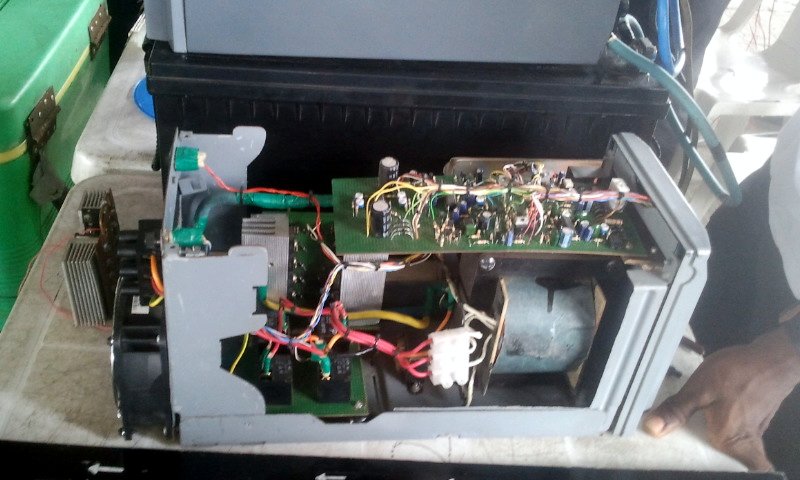
DIY inverter at Maker Faire Africa

#2 Makers hack objects. One of the most amazing things about Maker Faire Africa last year in Lagos was how many young people got involved. It's not every day that you see middle and high school kids make their own inverter or invent a urine-powered generator! Aside from identifying talent and motivating a new generation of young scientists and engineers, to see youth unafraid to try and make things that do things — and unafraid to fail — underscores how few people share that trait. Many of us think too many things are beyond our comprehension. We do not know how to make furniture or a dress, repair an engine, fix a broken fan or hard drive, or plumb a house. On one hand, that's no big deal; that's why we have specialists: carpenters, seamstresses and tailors, mechanics, electricians, computer engineers and plumbers. But on the other hand, when we fall in the trap of seeing objects as "black boxes" that do things mysteriously, in ways we think we cannot understand, we limit ourselves and what we can do. When that happens at the scale of a country or a continent the problem becomes colossal. Makers are revolutionaries because they regain control over their own lives — via the ability to make the things they use everyday. Plus they have tons of fun doing just that.


#3 Who no know go no. (To quote Chimurenga.) Professor Ayorkor Korsah of Ashesi University made a profound comment that paraphrases roughly as: in Ghana, often people who know how to make things don't/didn't go to school, and people who go to school don't/didn't work with their hands. (She also co-founded the African Robotics Network. Youtube video above shows Frugalbot by Mike and Gabrielle Robinson, one of my favorites from AFRON's "10 dollar robot challenge". We need alternatives to imported rubber tyres.) Someone else offered that this represents a fundamental schism in society (and therefore Ghana's technology culture) between "those who know book and those who don't." Whereas many of the people who actually make things in Ghana lack the added technical base that comes with formal or advanced education, many people privileged with education are overexposed to theory, and underexposed to practical — and even view the idea of "getting their hands dirty" as beneath them. People who are proud to proclaim "I'm a graduate!" prefer to work in air-conditioned offices than on a farm, in a workshop or at a factory. This is massively problematic because it means that collectively, through our own cultural biases, we are constraining our capacity to make more and better things by learning from and working with each other. This divide is related to what is sometimes called the difference between "formal" and "informal." Radical innovation will occur if we can bridge this gap.

#4 Pictures are powerful. Another maker at the breakout session pointed out that language is nontrivial. Sometimes the words that we use to describe things determine both who understands and how different people understand the same thing. Ghanaian education is generally pretty strong, stellar in some cases, but its important to remember that it is not perfect: it can tend to reward certain kinds of intelligence. The power of the arts is that they leverage imagination. Expanding the role of artists and the arts can engender new visual languages for how we talk about production, support different forms of making and ultimately generate new hybrids of maker free to unleash the power of creative problem-solving.


#5 The future is now. Sometimes it blows my mind how much most people don't realize that the future is already here. If not here, then just around the corner. Robots already make cars and pretty soon will drive them. People can already control machines with their mind (you can buy one here for $300). Citizens already own more drones than the US military (but they can still kill you with a machine gun). Google Glass is about to (start to) go mainstream (There is a reason Google's O/S is called Android; in the end, we'll all be cyborgs.) Humans have maintained a continuous presence in outer space for over a decade, there are hundreds of satellites orbiting our planet (you can track them here) including one 1.5 million miles away tasked with, essentially, nothing more than watching the sun continuously. And that doesn't even touch the on-going revolutions in AI and computation, materials, nanotechnology, renewable energy, pharmaceuticals, genetics, neuroscience and biochemistry more broadly. So what does all this mean? It means that we're changing the future — and its better to make your own future than to spend all your foreign exchange trying to buy it from someone else.

This post is too long, so next steps to follow. Are you a maker? Join us at Ghana Makers.

Tuesday, December 22, 2009

Notes from Barcamp Ghana 2009


Yesterday I attended
Barcamp Ghana 2009. Most exciting to me was to see so many people congregate with the express purpose of sharing strategies and ideas about building enterprise and engagement here on the ground in Ghana. And I appreciate the effort to use social tech: I found out about this Barcamp Gh on Twitter and found the Meltwater Entrepreneurial School of Technology (a nonprofit venture by the Norwegian IT company) the morning of using Google Maps and GPS on my G1 phone (without which it would have been infinitely more difficult to find). The use of technology--both in organizing and real-time sharing of this most recent barcamp in Ghana--was also testament to the opportunities for using social tech/media more/effectively (check out #bcghana09 on Twitter).

The morning panel addressed opportunities for youth leadership in development, mostly on an entrepreneurial/open-source/civic-engagement tip. Panelists were Estelle Akofio-Sowah (Country Manager of Google Ghana, former CEO of Busy Internet), Patrick Awuah (founder of Ashesi University), George Minta (ED of Empretec Business Forum) and Anna Bannerman-Richter (CEO of the Longevity Project). After lunch were threee one-hour blocks of break-out sessions. Notes (my highlights, not comprehensive) from the three sections I attended are below... I'm particularly interested if there is more out on there from the sessions on prison reform, using Google maps for businesses, social networks and innovation, and the entrepreneurship session taught by Meltwater faculty... Oluniyi David Ajao has notes from the session on blogging led by Kajsa Hallberg Adu of GhanaBlogging.com

1 // FASHION // leads: Adwoa Perbi and Esi Cleland

Ms. Perbi and Ms. Cleland have launched afrochiconline.com - 'an online clothing store born out of a vision to clothe Africa from within.' The broader business vision is to demonstrate that African print clothing can be contemporary and through sales of Gh-made clothing support local textile manufacture and resist the pressure of cheap imports: AfroChic clothes feature exclusively Gh-made prints (only womens clothing to date, but plan to sell menswear eventually as well -- AfroChic is afro-sheek not afro-chik). They led a discussion about starting an online clothing retailer in Ghana, sharing their own experience and soliciting feedback.

They developed their own standards for clothing sizes. An early visit to the Ghana Standards Board suggested over reliance on ISO designations for clothing sizes, largely un-calibrated to the Gh market or local clothing production. So they chose to define their own--after compiling data from a large number of seamstresses/tailors in Accra metro (I think as many as 50 or 90). Interesting that the founders are a computer scientist and a physicist.

AfroChic releases new clothing items online as often as biweekly. They warehouse ready-made garments sized according to their in-house sizing. Shoppers browse the catalog and order online but pay on delivery--AfroChic delivers to buyer's home or business. Clothing production is distributed across a local network in which each individual seamstress/tailor has first successfully sewn a default size of the garment they produce. Quality control derives from the centralized warehousing prior to delivery. The intended market is Gh women 18-35; the online shop only sells within Accra metro now but sees the entire West African market as a viable future.

Re: competition. One of the participants explained that he stopped the business making bags that he started in high school because suddenly a dozen classmates were also making and selling bags, and blatant copying was rampant. At the same time, the ubiquity of fashion-related signage alone in Accra hints that there is a huge market for homegrown options. Perbi and Cleland added that not only do they welcome competition, it is critical for the development of African clothiers that can compete at scale with imported clothing.

In my opinion, if they can sustain their sizing standards it could represent a major innovation--not simply as a metric, but as a method to build a local platform for distributed production and delivery of Gh clothing. This could be amplified considerably if they integrate social media (how many Ghanaians in their target market *do not* visit Facebook each week) and geo-tagging (I have no idea how they manage delivery now, but using GPS-enabled smart phones and Google Maps could be instrumental as they increase volume). Having consistent sizes, quality, fresh design available via online shopping and to-door delivery seems like a winning combination, while the sizing itself has potential to become a market-wide standard.

Picture: Golda Addo, left (who chaired the session on renewable energy) and Esi Cleland, middle. Lively debate over setting optimal price points. Verdict: type of fabric and stitching affect cost, and a modest premium can help establish brand quality at launch.


2 // GREEN ENERGY // lead: Golda Addo

Ms. Addo is the founder and managing director of Energy Solutions Foundation - 'a Ghanaian NGO focused on the development and use of Renewable Energy Technologies (RETs) and the promotion of Waste Recycling in Ghana.' She became interested in sustainability when she witnessed Accra's garbage dumping practices and felt driven to organize against ecological degradation and energy crisis in Ghana. Ms. Addo opened up a group conversation about greening Ghana after an overview of the Energy Solutions Foundation's findings, how they have been seeking change in policy and on the ground in both enterprise opportunities and wider cultural attitudes about waste and energy.

Most significantly, she pointed out that Ghana has tremendous potential for the use of solar and wind energy, biogas and biowaste briquettes. How optimally can adoption of these alternative energy practices counter the decline in available firewood and electricity, especially hydropower. The Foundation has lobbied Gh government to prioritize renewable energy and commit to solutions that engage communities. (Wind turbines were installed on the Tema-Kpone road, but have apparently fallen into disrepair...has anyone seen this or know more info?) Ms. Addo also argued that one of the biggest deterrents for consumer adoption is the lack of access to simple output vs. cost metrics (e.g. if I pay GHC1800, I will get 1kW of solar power with 48 battery back-up). Break-down of renewable energy technologies by size vs. cost is a way to help citizens better understand their options. Renewable energy does not have to be either/or. It is just as possible for people to re-wire a few outlets to switched solar--so that when the power grid goes off, they retain a modest supply perhaps enough to run a fan a few lights, a laptop. Incremental change can--in aggregate--transform how Ghanaians generate and use energy.
Of the maybe 15 participants in this break-out session, only one had renewable energy installed in their house(s)--although notably, it was a house with solar and battery back-up. Participants noted that it is also hard for consumers to find technical capacity. In Ghana, its easy to find a mason or a plumber, but radically more difficult someone who can install a PV solar array or a biogas digester. The Energy Solutions Foundation has a number of volunteers and contacts on request who can assist in many cases, and also leads workshops and training. Several inspiring projects so far include student design projects and plastics recycling. There is a wide open space for creative thinking (see Trashy Bags) but scaling up remains a challenge (e.g. a plastics recycler in El Mina does weekly pick-ups in Accra, paying 15 pesawas per 1 kilo of lightweight plastic, but how do potential collectors identify this business opportunity?) Participants also asked: how do we find out more information?

Ms. Addo offered the Foundation's network as a resource, welcomed volunteers and mentioned that GTZ may be a reference source for more substantial projects. A Google search also returned this list of solar (and wind) energy businesses in Ghana, no idea how up-to-date and the Energy Center at KNUST.

Picture: the facilitator for the session on starting a company in Ghana, introducing his break-out during the agenda setting session.


3 // START-UPS //

I didn't get the name of the gentleman who led this third session on 'how to start a company in Ghana.' But it was a big group of over two dozen young people (median age under 30 or 25), many of whom had already started businesses both in Gh and abroad, and many more who were either actively beginning the process or planning to in future. It was a lively discussion and the moderator did well by steering the conversation away from corruption! transparency! integrity! critiques to nuts-and-bolts dialog of lessons learnt and best practices.

A lot of the conversation centered on registering a business. Some complained that the documents dated 'from the colonial era' while other countered that the legal language can be frustrating but is useful in the event of litigation (wording is designed to avoid ambiguity). There was some disagreement on requirements such as how long you can operate without registering and sequencing registration across a decentralized set of government agencies. Answers to my question 'why bother registering in the first place?' were a) to avoid getting in trouble down the line; and b) to support Ghana's development by paying taxes...I thought both responses were pretty solid.

Similarly, one participant explained how his company--which develops games for mobile phones--is registered in Ghana and just completed a nontrivial process of getting a (paid I assume) game on the iPhone App Store. The company deliberately chose to register in Ghana and seeks to prove that is not incompatible with global ambitions. Clearly in digital space, there are exciting prospects for this class of attitude about global competitiveness. It was also cool to see a rep from Web4Africa, a sponsor of Barcamp Ghana 2009, sat in on the break-out session...growth of Gh IT and web entrepreneurship should demand infrastructure for local hosting.

Other key points:
! Everyone thinks they need someone to do *it* for them...but be proactive--do things for your yourself! ...where *it* ranges from registering a company to navigating red tape to filing paperwork. Several participants mentioned that they paid consultants to facilitate their registration process, but one noted that he paid GHC 200 for this service several years ago and only GHC 80 when this year he directly registered a new company himself.

! That said, don't try to do everything: Complement your expertise with assistance from experts in other areas. Know your limitations and find top people to consult for your business when you need help.

! Business success in Ghana occurs within an 'economy of affection.' While the group had competing approaches ('I include finder's fees in my books,' 'it was suggested to me by government employees to keep two sets of books,' 'what are the actual legal guidelines for ethical behavior?') there was still consensus that all aspects of business are easier the more people like you.

! In Ghana we don't have documentation centers--the information is in people's heads. (see above)

! You are expected to have started your business *before* you initiate the registration process. Application materials will ask for a 'date of commencement.' Although there are different forms of incorporation, with various exemptions in some cases (e.g. Ghana Free Zone businesses, manufacturing, start-ups that are not-yet profitable) typically you are legally obliged to register within 30 days of commencing business (possibly defined by date of first sales?); it is illegal to operate a business after 1 year without having registered that business.

! Anticipate timelines. Some suggested that people tend to pay for fast-tracked or preferrential treatment when they have not budgeted enough time for a given task. If you may need a passport in six months, apply now: you will then have sufficient time to follow official procedure.

George Minta-Jacobs, Executive Director of Empretec Business Forum which supports SMEs in Ghana, offered three rules of thumb: 1) Register your business (after developing your business plan and setting a 'date of commencement'); 2) Get your Tax ID Number and VAT (if your business is not turning a profit in early stages, report nil profit but you are still required to file); 3) Keep your books well! (get help if you need to, but educate yourself or you could unwittingly be taken advantage of).

The session focused more on educating yourself and the power of documentation than on specific business models or opportunities for entrepreneurship. For more information: former Gh Attorney General Joe Ghartey has written the best overall guide, Doing Business and Investing in Ghana: legal and institutional framework if you can find it. Several participants also praised Doing Business which documents business regulations globally and has a section on Ghana and the SME Toolkit developed by the IFC which is available online for free. Participants of the break-out session compiled a list of emails and phone numbers in order to generate a working group on entrepreneurship out of Barcamp 2009.

Thanks and congratulations to the organizers for a great event.
Template developed by Confluent Forms LLC; more resources at BlogXpertise